ServicesCommercial Roofing
Commercial Roofing in Travis Ranch, TX
We install flat, low-slope and metal roof systems on offices, shops and small commercial buildings. Before you pick anything, we walk you through what each system is, how it holds up and what it means for the people working under it.
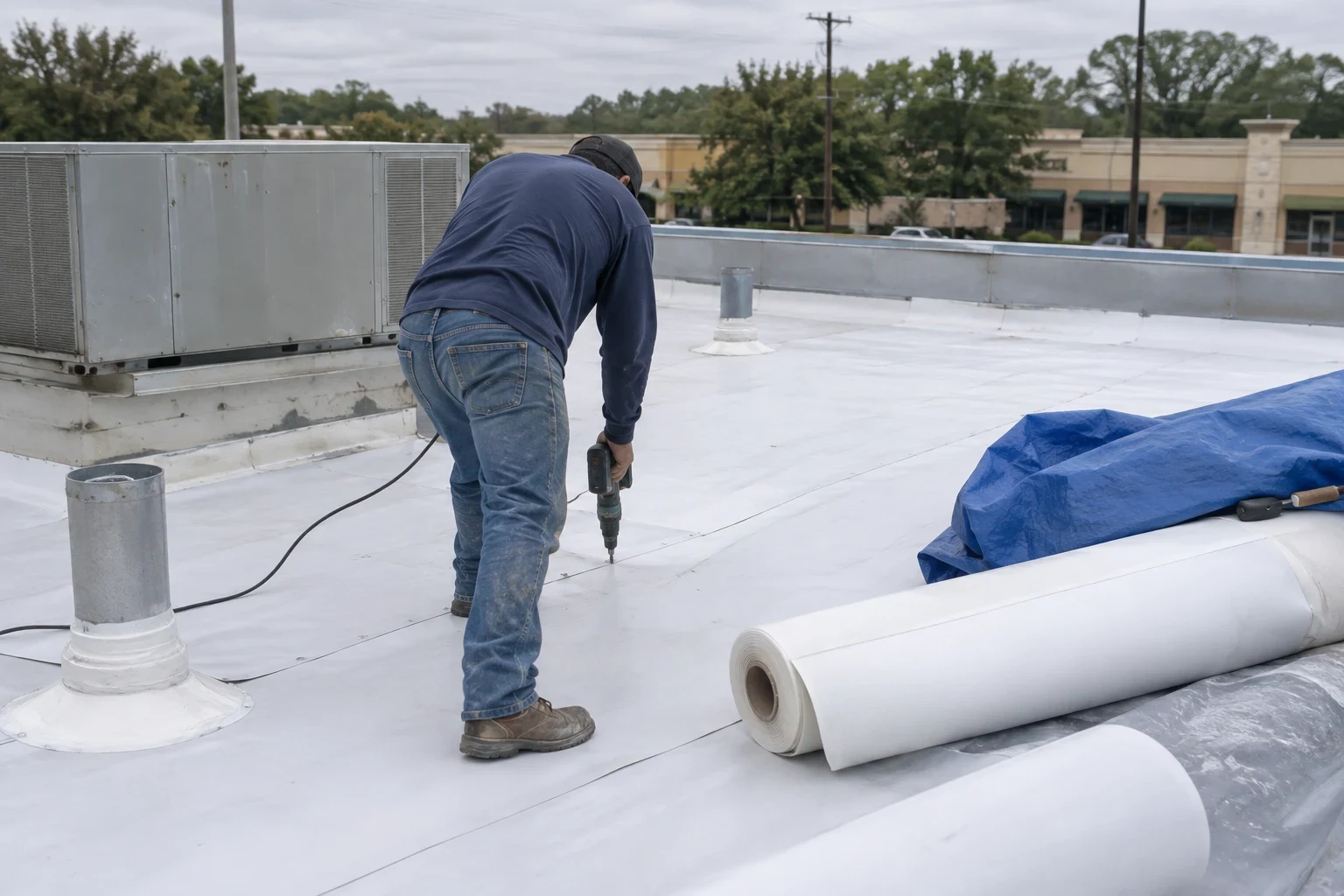
How a commercial roof works
Most commercial buildings have a flat or low-slope roof. Water does not run off fast the way it does on a steep shingle roof. So the membrane, the seams, the flashing and the drains carry the whole load. If one of those is weak, water finds it.
There are a few common systems, and they are not interchangeable. A white TPO membrane reflects heat. Modified bitumen is thicker and takes foot traffic well. Metal panels shed water and last when the slope allows it. We explain the tradeoffs in everyday words so you can pick what fits your building and your budget.
If the project also involves work inside the building, our Commercial Contracting page covers that side of things.
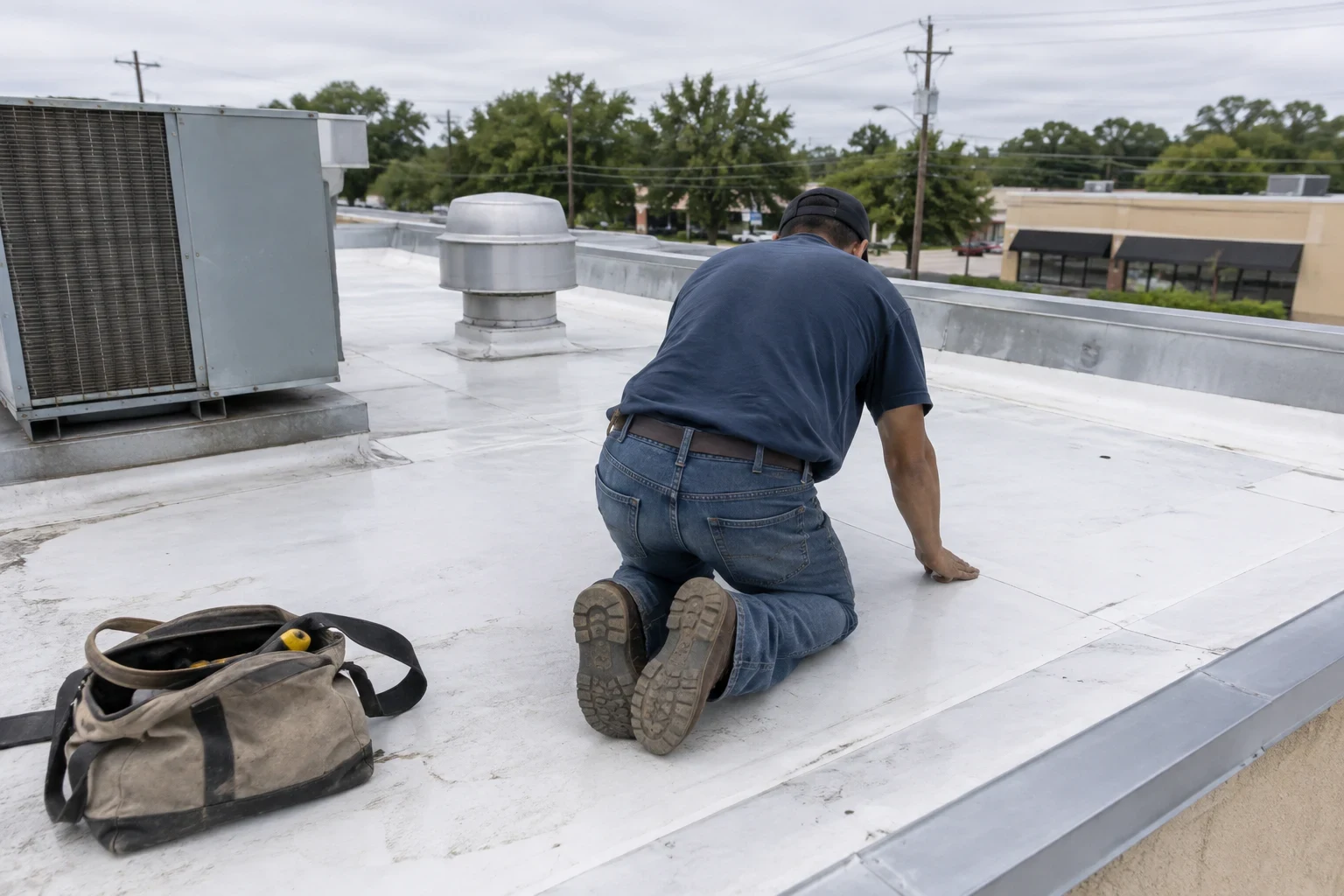
What the work includes
- 01
TPO single-ply membrane
A white sheet membrane with seams welded together by hot air. It reflects a lot of sun, which helps keep the space below cooler through a Texas summer. It is a common pick for flat roofs on offices and retail.
- 02
Modified bitumen
A rolled asphalt-based membrane laid in layers. It is tough under foot traffic, so it suits roofs with HVAC units that get serviced often.
- 03
Metal roof panels
Standing seam or exposed-fastener panels for buildings with enough slope. We tell you which type fits and why the difference matters for upkeep.
- 04
Flashing and edge metal
Most leaks start where the roof meets a wall, a curb or a pipe. We flash every penetration and finish the edges so wind cannot get under the membrane.
- 05
Drains and scuppers
We set roof drains and scuppers so water leaves the roof instead of sitting on it. Getting the drainage right does more for a flat roof's life than almost anything else.
Questions about Commercial Roofing?
Call(972) 636-4743Signs your building's roof needs attention
Water that sits for days
Some puddling after rain is normal. Ponds that are still there two days later mean the roof has low spots or the drains are not keeping up, and standing water wears a membrane out early.
Blisters and lifting seams
Bubbles in the membrane or seams you can lift with a finger mean moisture or air has gotten underneath.
Stained ceiling tiles
Brown rings on drop ceiling tiles are often the first thing tenants notice. The leak on the roof is not always right above the stain, so it takes some looking to trace it back.
Flashing pulling away
Check where the roof meets walls, parapets and rooftop units. Gaps or loose metal there let water straight in.
Rust and backed-out screws
On metal roofs, rust streaks and fasteners working loose show the panels are moving and the seals are aging out.
How a job runs, start to finish
- 1
We walk the roof
We go up, look at the membrane, seams, flashing and drains, and take photos. You see what we saw.
- 2
Written estimate, line by line
You get the system we suggest, any other options that make sense, and what each line costs. We tell you plainly if a smaller fix will do.
- 3
A schedule that fits your business
We plan around your hours, parking, deliveries and the people inside. If noise or smell will be an issue, we say so ahead of time.
- 4
Install day
We protect entrances and walkways, stage materials safely and keep the crew working one section at a time so the roof is never left open overnight.
- 5
Cleanup and walk-through
We run magnets for screws and nails, haul off debris, and walk the finished roof with you.
Where the cost comes from
No two commercial roofs come out the same on paper. A pair of buildings with matching footprints can end up with very different numbers once we look below the top layer. These are the things that shift the total the most.
- Size and shape
- Square footage counts for the most. A roof cut up by parapets, curbs and level changes needs more labor than a plain open rectangle.
- What is underneath
- Soaked insulation or a soft deck has to be torn out before new material goes on. We check for that early and show you the photos.
- The system you choose
- TPO, modified bitumen and metal each carry their own material and labor cost. We tell you what the extra money buys, or what you give up by spending less.
- Access and rooftop equipment
- Building height, whether we need a lift or crane, and how many HVAC units sit on the roof all add hours.
- Permits and timing
- Where a permit is required, we pull it. Working around your business hours can add days, and we put that on the estimate from the start.
Commercial roofing questions
Can my business stay open while you work?
Usually, yes. We work in sections and keep entrances clear. If a day will be loud or a unit has to be shut off, we tell you ahead so you can plan around it.
Which roof system is right for my building?
It depends on the slope, how often people walk the roof, and how much heat the space below takes on. We lay out the options side by side and tell you which one we would pick and why. The choice is yours.
How long does a commercial roof job take?
A small building can take a few days. Larger roofs or ones with wet insulation underneath take longer. You get a time estimate in writing with your quote.
Do you handle the permit?
Yes. Where the city requires a permit, we pull it and schedule any inspection it calls for. You do not need to deal with the paperwork.
Do you also work on houses?
We do. Our Residential Roofing page explains that work, and we serve Travis Ranch along with nearby towns like Forney, Heath and Rockwall.
Find out what your roof needs
We will look at your building's roof, show you what we found and explain your options in plain terms. The estimate costs you nothing.