ServicesResidential Roofing
Residential Roofing in Travis Ranch
We put new roofs on homes, from the wood deck up to the ridge cap. Before any work starts, we show you what each layer does, what your options are and what they cost. You decide with the facts in front of you.
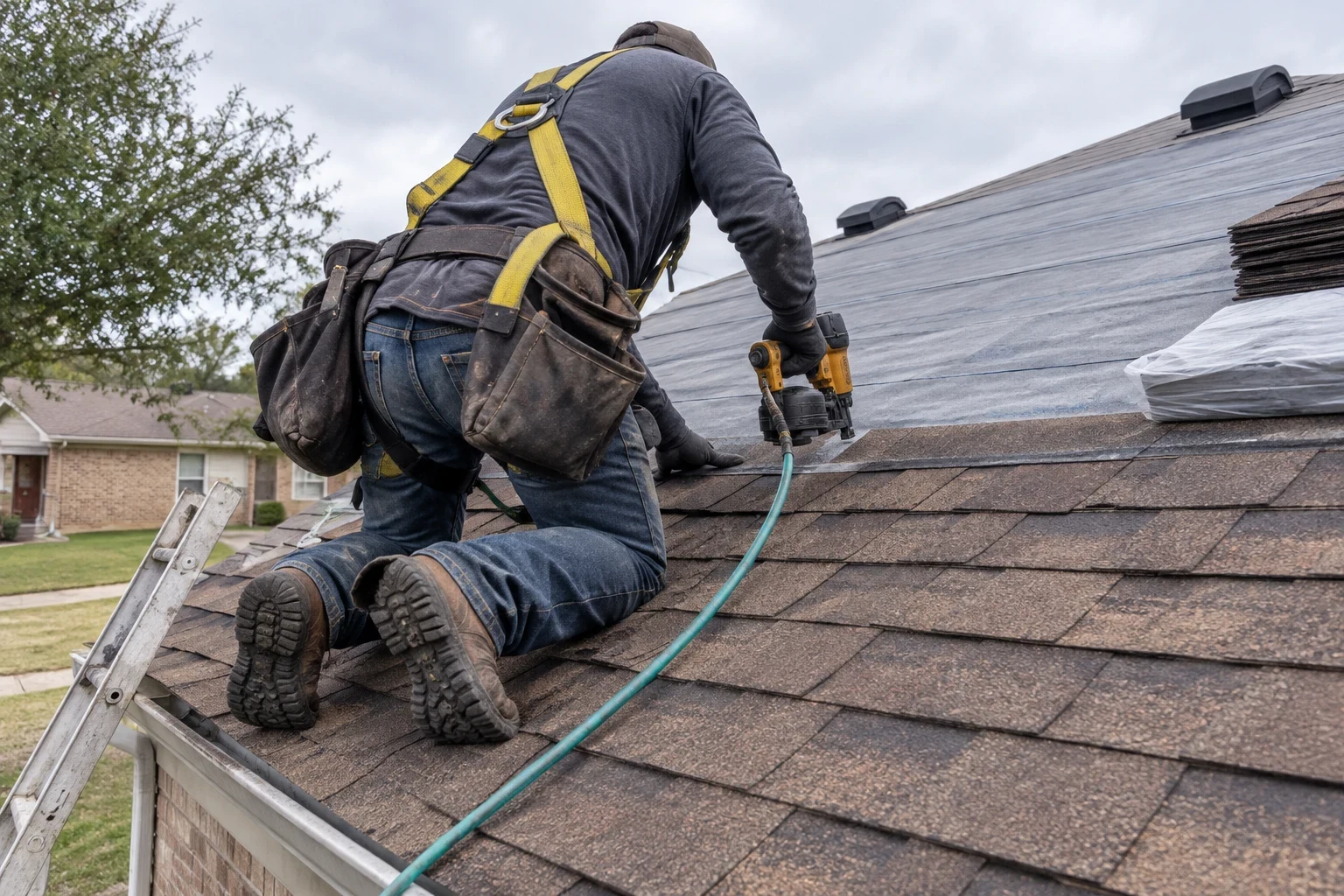
What a New Roof Actually Includes
A roof is more than shingles. Under them sits a wood deck, a layer of underlayment, metal flashing at every wall and chimney, and a vent system that lets hot air out of the attic. If one of those parts is wrong, the shingles on top wear out early.
Our residential roofing work covers that whole system. We take the old roof down to the deck, fix what we find in the wood, and build it back layer by layer. Then we walk you through what we did and why.
This page is for houses. If you own a shop, office or warehouse, our commercial roofing page covers flat and low-slope roofs.
What We Do on Every Roof
- Old roof off, down to the wood
- We strip the old shingles and underlayment until the bare deck shows. Laying new shingles on top of old ones covers up damage and puts extra load on the framing.
- A close look at the decking
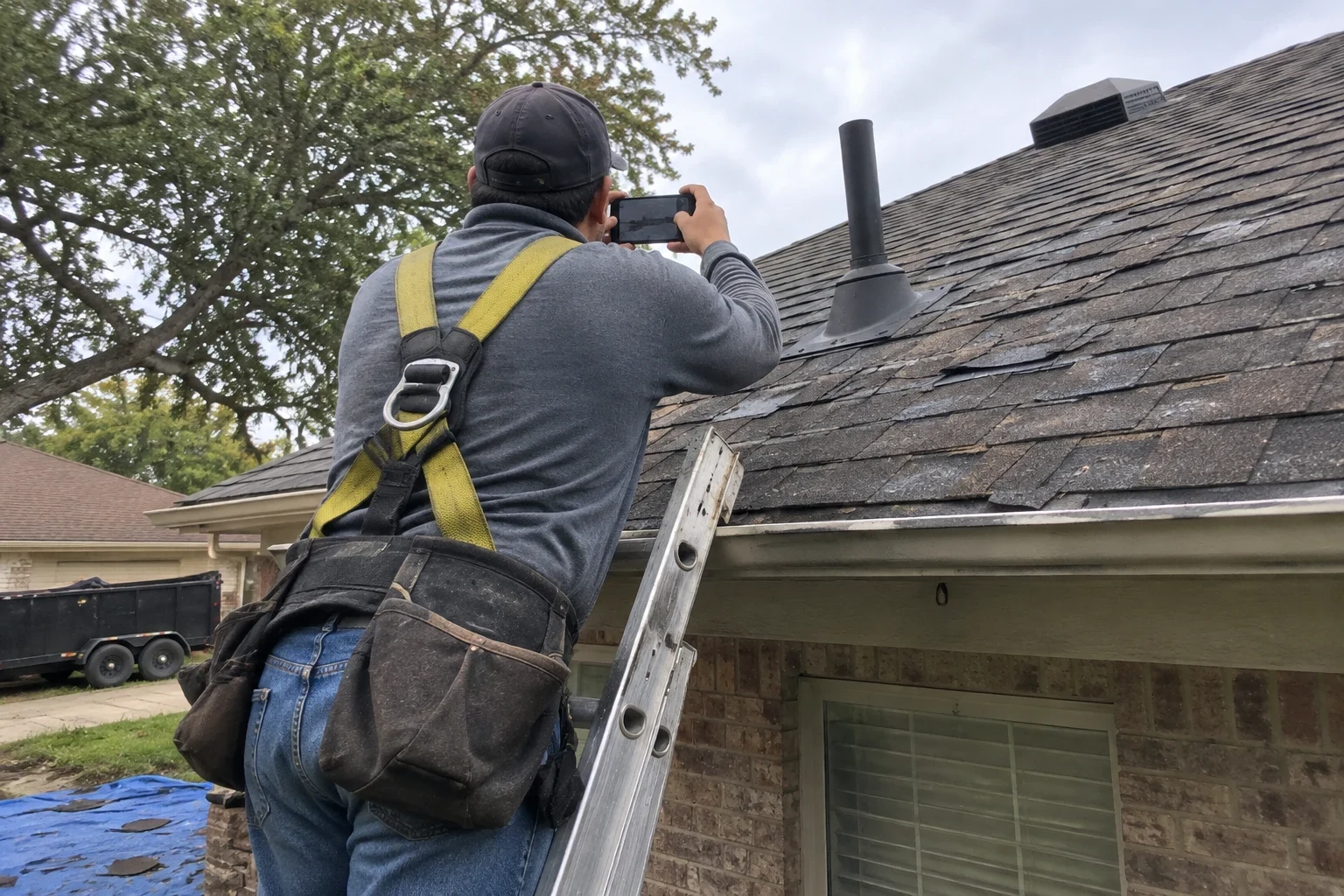
- With the deck bare, we walk every section looking for boards that feel soft or show rot. Those get replaced before the new layers go down. We photograph them so you see the same thing we did.
- Underlayment and drip edge
- The whole deck gets a synthetic underlayment, a backup layer that keeps water out if a shingle ever lifts. Along the eaves and rakes we add drip edge metal, which sends water off the edge instead of letting it creep back under.
- New flashing, not reused
- Walls, chimneys and pipes are where most roof leaks begin. We put in new step flashing, pipe boots and valley metal instead of saving worn pieces.
- Attic ventilation
- We check how air comes in low and leaves high in the attic. When that air can't move, a Texas summer cooks shingles from underneath, so balanced vents help the new roof hold up.
- Shingles and ridge cap
- The shingle you picked gets fastened exactly where the maker's install sheet says the nails belong, and with the count it asks for. Ridge cap finishes the peaks.
Signs Your Home May Be Ready for a New Roof
Granules in the downspout splash
Those little sand-like grains protect shingles from the sun. When you see piles of them on the ground, the shingles are wearing thin.
Curled or cracked shingles
Edges that lift or crack mean the shingles have dried out. Wind gets under them easier after that.
Stains on the ceiling
A brown ring on a ceiling or attic wood means water got past the roof. By the time it shows inside, it has usually been going a while.
A sagging line
Look at the roof from the street. If the ridge or a section dips, the deck under it may be soft.
Age
Most asphalt roofs here run somewhere around 15 to 25 years, depending on the shingle and the attic airflow. If yours is near that range, it is worth a look.
What Moves the Price of a New Roof
No two roofs get the same price. Size counts the most, but a handful of other things push the number up or down. Each one gets its own line on your estimate so you can see where the money goes.
Roof area and roofline
We figure size in squares, the trade's unit for a 10-by-10-foot patch of roof. Every hip, valley and dormer means more cutting and more flashing, so a roof with lots of angles costs more than a plain gable with the same footage.
Pitch and height
Steep slopes and two-story homes call for more safety gear and a slower pace. That shows up as labor.
Layers to remove
Some houses have a second layer of shingles nailed over the first. That means more tear-off time and more debris to haul.
Condition of the deck
Rotted wood stays hidden until the old shingles are gone. So your estimate sets a price per sheet for replacement boards ahead of time, and you already know the cost if we find any.
Shingle choice
Three-tab, architectural and impact-rated shingles sit at different price points. We tell you what the extra cost buys, then the pick is yours.
How a Roofing Job Goes, Start to Finish
- 1
Pick a visit time
Give us a call and describe what you've noticed on your roof. We find a day and time that fits your schedule.
- 2
Measure, look, talk it over
On the visit we measure the roof, go up into the attic and check the vents and flashing. Afterward we sit down together and compare shingle options, so you know what each one gets your house.
- 3
A line-item estimate in writing
The estimate breaks out materials, labor and the permit. It also spells out up front how bad decking is handled, so the final bill matches what you agreed to.
- 4
Install day
First we cover plants and protect the yard. Then the crew tears off, repairs the deck and builds the new roof, which usually takes one or two days on a house. Where the city calls for a permit, we pull it.
- 5
Cleanup and walkthrough
We haul off the old roofing, then run a magnet on wheels over the lawn, flower beds and drive to pick up loose nails. Last, we walk the job with you and answer whatever you ask.
Residential Roofing Questions We Hear
What is the difference between three-tab and architectural shingles?
Three-tab shingles are one flat layer, so the roof has an even, uniform look. Architectural shingles stack two layers into one thicker shingle, which gives the roof some shadow and depth. They usually stand up better to wind and last longer. Most of the homeowners we roof for pick architectural.
Are impact-rated shingles worth it?
Hail shows up in North Texas most springs, so they're a fair thing to consider. Impact-rated shingles are made to take a hit better than standard ones. Some insurers lower premiums for them, so check with your agent before you choose.
Is it okay to lay the new roof right on top of the old one?
We won't do that kind of job. A layer on top hides soft decking and tired flashing where nobody can check them. It also adds weight to the framing and holds heat, which shortens the life of the new shingles. Stripping to the wood lets us start fresh.
Do I need to be home on install day?
Not all day. We'd like a few minutes with you when we start and again for the walkthrough at the end. Move cars out of the driveway, keep pets indoors, and plan on some noise during tear-off.
What if you find rotted wood?
We pause, photograph it and show you. The per-sheet price was already set on your estimate, so you know the cost before we replace anything. No charge gets added without your say.
Find Out Where Your Roof Stands
We'll come by, look over your roof and tell you what we find without the jargon. Our crews work in Travis Ranch plus Forney, Heath, Rockwall and towns close by.